
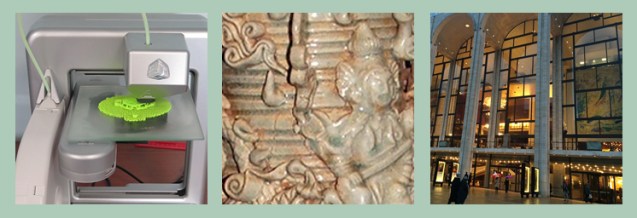
“The tactile, the relational, and the incomplete are physical experiences that occur in the act of drawing. Drawing stands for a larger range of experiences, such as the way of writing that embraces editing and rewriting, or playing music to explore again and again the puzzling qualities of a particular chord. The difficult and the incomplete should be positive events in our understanding…The issue..is more complicated than hand versus machine. [Computer design programs] might serve as an emblem of a large challenge faced by modern society: how to think like a craftsman in making good use of technology.”
-Richard Sennett, The Craftsman
Design is a solution. Regardless of a given design’s popularity, longevity of use, influence on later designs, or how prolific its production, all design is a solution. How is a design’s success measured? One way to evaluate individual designs is to examine the use of available technology involved in making the design. A second is craft.
In a time where 0s and 1s have permeated the everyday, where communication can be ceaseless and instantaneous regardless of physical distance or time zone between you and your long lost fifth cousin twice removed 3000 miles away (who you were reconnected with through Ancestry.com), a disconnect from time and space can occur.
The lack of connection to the physical can create the feeling of floating in the stratosphere where you can see Earth below. With readily available technology you can zoom in and access information seemingly on everything and anything below, regardless of contextual experience. A disconnect between the individual and understanding is created by this flood of information devoid of vetted filters. While technology, both current and historical, can have this dehumanizing impact, when guided by craft, design can be most glorious!
Craft, in contrast to technology, reconnects and grounds you to physical time and space. Craft takes into account the real, and the tangible. The physical properties of materials, seasons, time of day, and our own fragility as human beings are all significant when considering craft.
Successful design harmonizes both available technology and craft. Technology and Craft will examine the process of developing technology and the result when technology and craft intersect thoughtfully in design ranging from ceramics to transportation networks.
Explore!
Children’s books on ceramics
From the Ground Up: 5000 Years of Ceramics
 Make!Clay Anywhere
 design IV space